
Air cooling
The standard configuration is air cooled. Preserve the specified ventilation and cooling conditions within the completed machine.
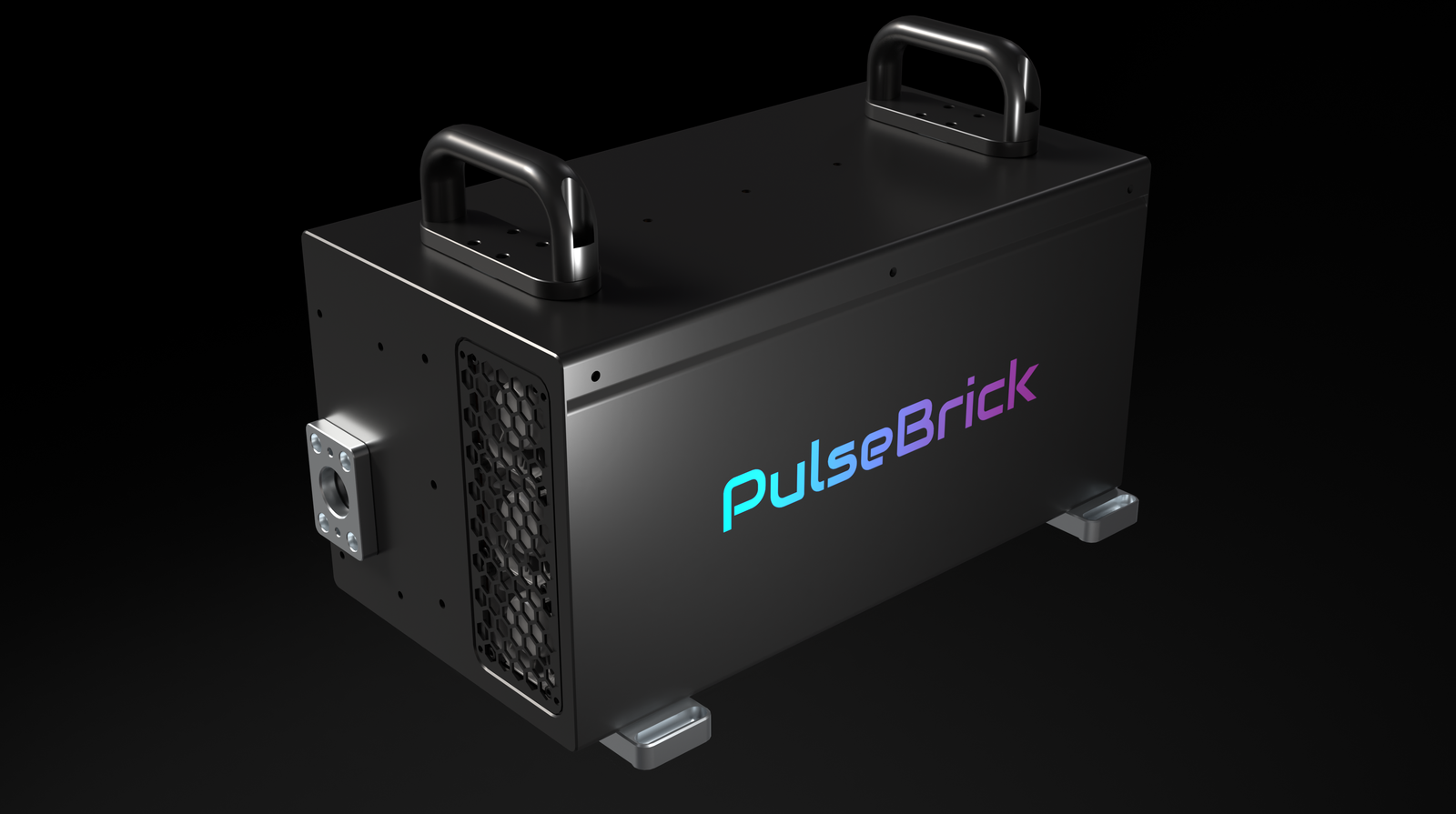
PulseBrick is a fixed-function ultrashort pulse laser source for OEM integration. We focus on the functions that matter: switch output on or off, adjust pulse energy, and build the process around a defined factory configuration.
Application trials ongoing. Nominal specifications describe the factory configuration; measured performance is documented in the unit-specific test report.
Factory output setpoint
Nominal pulse duration
Nominal repetition rate
Standard wavelength
Specifications shown are nominal. Individual unit performance may vary; measured values are provided in the unit’s test report.
We stripped the femtosecond laser back to its essential functions and simplified the manufacturing approach. PulseBrick is designed around a defined operating point, with control focused on the output needed by the application.
Routine output control is separate from the completed machine’s protective interlock, stops and safe-access functions.
Request output when the integrated machine permits it.
Adjust the pulse energy for your process, with optical output defined by the delivered calibration.
25 µJ is the nominal pulse energy at 400 kHz and 10 W. The unit report defines calibrated output; intermediate command settings need not produce a linear optical response.
PulseBrick combines an essential laser source with optical systems engineering support. We can help design the system, work through beam delivery and focusing, and advise on laser safety for your integration.
The standard configuration is air cooled. Preserve the specified ventilation and cooling conditions within the completed machine.
Four platform mounting feet and a front accessory interface support integration. Use approved drawings for mounting, handling and beam references.
The serial-number-specific test report records measured performance, configuration and test conditions for the supplied laser.
The intended basic interface uses a differential 0–10 V analogue command and two supplied 24 V power supplies, with separate housekeeping and high-power roles. Optional digital status monitoring depends on the factory configuration.
The standard calibration target is 10 W at 10 V, subject to factory calibration and verification. Intermediate command voltage must not be assumed to produce a linear change in optical power. The nominal 400 kHz operating point does not define a customer-adjustable repetition-rate range.
Use the configuration-specific drawings, electrical interfaces and integration instructions supplied for your unit when designing and commissioning the completed machine.
Tell us about the material, required feature and integration environment. We can discuss the applicable configuration, optical systems engineering support, current measurements, availability and commercial terms before you order.
For configurations, accessories and engineering enquiries:
sales@pulsebrick.com
For unit documentation, service and technical support:
service@pulsebrick.com
PDF references for the nominal source configuration and current OEM integration basis.
Use the configuration-specific documentation supplied for your unit for installation and commissioning.